




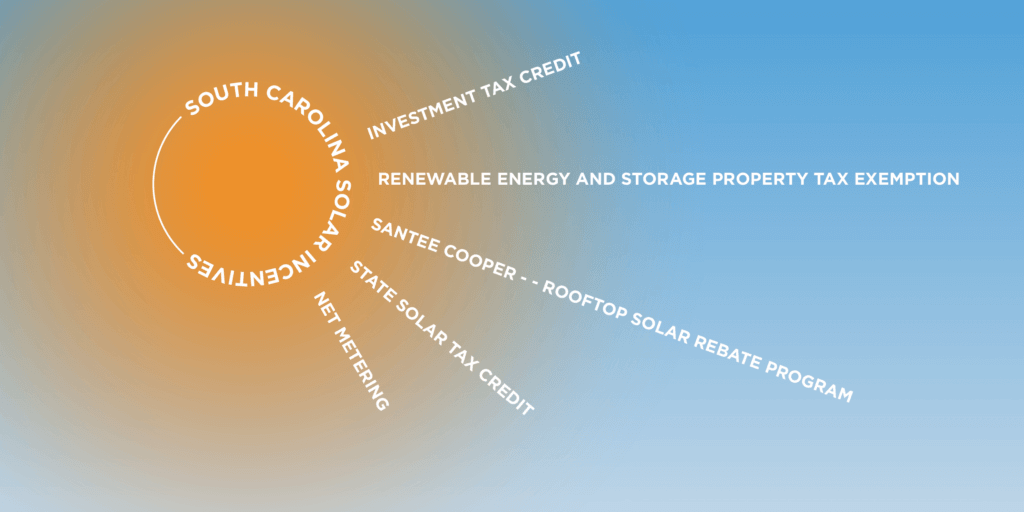
South Carolina has emerged as a shining example of solar energy adoption in the United States, providing a variety of state and federal incentives to assist homeowners in embracing renewable energy. With financial benefits like tax credits, rebates, and exemptions, switching to solar power in the Palmetto State is not only environmentally friendly but also economically smart. Here’s a breakdown of the major solar incentives available.

Renewable Energy and Storage Property Tax Exemption
Adding solar panels or battery systems often increases your home’s value significantly—studies suggest homes with solar installations can sell for 4-6% more than comparable homes without solar. Fortunately, in South Carolina, this added value won’t result in higher property taxes.
South Carolina offers property tax exemptions for solar systems with a capacity of 20 kilowatts (kW) or less, advanced inverters, and battery storage systems. This means homeowners can enjoy the benefits of increased property value without worrying about a corresponding rise in taxes. These exemptions provide peace of mind and make solar an even smarter investment.
Santee Cooper – Rooftop Solar Rebate Program
Homeowners serviced by Santee Cooper, one of South Carolina’s largest utility providers, can reduce their solar installation costs through the Rooftop Solar Rebate Program. This initiative offers a rebate of $0.95 per Watt-hour (Wh) produced by installed solar panels, with a maximum rebate of $5,700.
The program supports systems up to 20 kW in size, making it a good fit for most residential installations. South Carolina residents can make the transition to solar energy more affordable and accessible by utilizing this rebate.
Net Metering Programs and Policies
Although net metering is not mandated statewide, many utility providers offer programs to credit customers for excess energy produced by their solar panel systems. These programs can lower monthly energy bills by using the energy your panels produce to offset what you consume.
During peak sunlight hours, your solar system may produce more energy than your home uses. This excess energy is sent back to the utility grid, and you receive credits on your utility bill. Credits can be used to offset energy costs during periods when your rooftop solar panel system doesn’t produce enough power, such as at night. Reach out to your local utility provider to explore net metering options and discover how they can help you maximize your solar savings.

Why Solar Incentives Matter
South Carolina’s renewable energy incentives underscore the state’s dedication to fostering energy independence and promoting clean energy adoption. By embracing solar power and leveraging these programs, homeowners can significantly reduce their carbon emissions and energy expenses while supporting the transition to sustainable living.
These financial incentives make it easier for households to adopt clean energy solutions by lowering upfront costs and ongoing energy expenses. Additionally, they enhance the value of your home, offering both immediate and long-term benefits.
Investing in solar energy is more than just a smart financial decision—it’s a meaningful step toward a greener, more sustainable future. Contact Blue Raven Solar today to discover how South Carolina’s solar incentives can make transitioning to clean energy more affordable than ever. Our team of experts will guide you through the process of maximizing your savings, from tax credits to utility rebates. Take the first step toward reducing your energy bills and your carbon footprint—start your solar journey with Blue Raven Solar today!
Sorry, the comment form is closed at this time.